Updated: February 11,. 2020
Some people make apple tree pruning complicated. It’s not.
The reason why some make it sound complicated is because there is a dizzying array of factors that could affect the outcome of each cut.
But this is irrelevant. Apple trees are forgiving. All you have to do is get most things right and you’ll have great apples.
In fact, all you have to do is follow these nine easy steps, and your apple trees will be on the path to realizing their genetic potential.
Table of Contents
Why is pruning apple trees important?
If you are not already convinced, you should be pruning your apple trees. The simple truth is your apples won’t be as big and there won’t be as many if you don’t prune.
Plus, your trees will be more susceptible to disease and getting eaten by deer (because the tasty branches will not be far enough off the ground).
Dull cutting tools will result in ripped bark or otherwise damaged branches.
— Suburban Hobby Farmer
Furthermore, it’ll be harder to pick apples without damaging unpruned trees.
Let’s take a sec to get the legal words out of the way. This article may contain affiliate links. That means if you click and buy from my partners, I will make a tiny amount of money. This in no way affects my recommendations.
Pruning Tips
Before starting on the nine steps, there are a few things you should know:
- Learn from The Apple Grower. I learned most of the information in this article from The Apple Grower by Michael Phillips. You might want to check it out.
- Prune In late winter. The best time to cut is at the end of winter. This is when it’s most difficult for disease and bugs to get a foothold in pruning wounds. Plus, there are no leaves on the trees. This gives you a clear view of where to make your cuts.
- Size matters. Full grown apple trees can range in size depending on the type. Apple trees can be dwarfs, semi dwarfs or standard. Dwarfs stay small (10 feet) even if you don’t prune them. But you should. Semi dwarfs will get big (15 feet or more) if you don’t prune them. You have to work at keeping them at a size where they are easy to pick from the ground. Standard apple trees will grow big even if you prune them. Full grown trees can get very large. I’ve seen a cider apple trees that was never pruned that was 50 feet. But usually they are about 30 feet. Of course, the rule of thumb is a bigger tree will have more apples.
- You need sharp cutting tools. Why? Because dull cutting tools will result in ripped bark or otherwise damaged branches. More to the point, a clean cut will dramatically increase your chances of problem free healing. I use high quality bypass shears, bypass loppers and pruning saws. Yes good pruning tools are expensive, but you are going to prune annually for the life of your trees. No sense in being aggravated each year by ineffective tools. If you do cut a sucker and have a “bark tag” left over from the cut, you can cut the tag with sharp scissors to even up the cut.
- Toss your hat. Age old wisdom says you should prune so that you are able to throw your hat through the center of the tree. This way, air and sunlight will reach the interior and the apples will be easier to pick. This is good advice.
- Cutting the knuckle will hurt. I’m not talking about your hand. The knuckle is the part of the tree where the sucker or branch attaches to the trunk or branch. It’s the swollen part at the very beginning. Don’t cut into it because the tree will have a harder time healing.
- Don’t overdo it. This is important! Never prune more than 25% of an apple tree crown in one season. Spread it out over multiple years. Keep in mind that each apple needs 40 leaves to support it.
Related: Honey Crisp apple tree.
How to prune apple trees: nine easy steps
How to prune apple trees: nine easy steps
Pruning apple trees is not so hard!


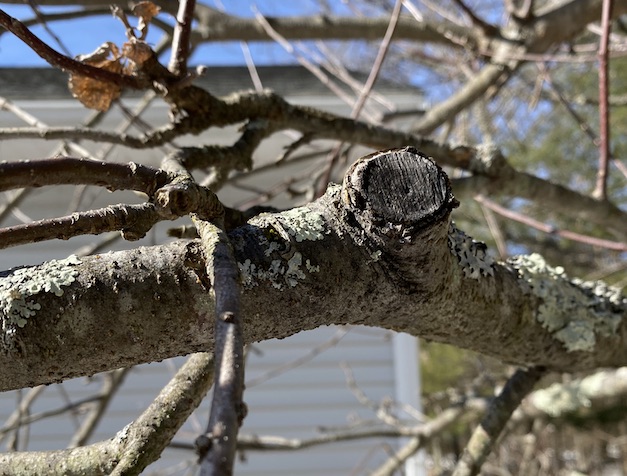


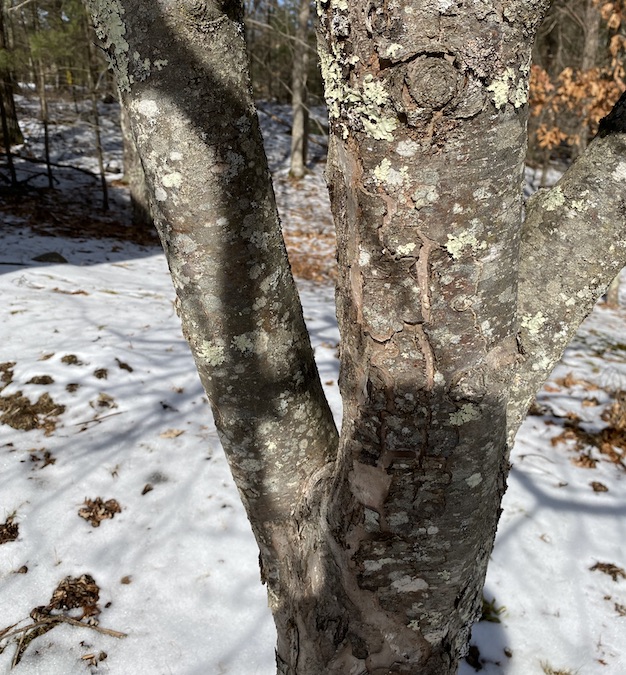
Of course, not all trees require all nine steps. If, however, you can make sure each step is covered for each of your trees, you’ll be in excellent shape.
If you’ve got easy to implement pruning apple tree advice, please let us know in the comment section below.
Related articles that might interest you:
Suburban Hobby Farmer is a participant in the Amazon Services LLC Associates Program, an affiliate advertising program designed to provide a means for sites to earn advertising fees by advertising and linking to amazon.com.